

Families caring for an elderly parent or a loved one with a disability often reach the same crossroads: they want to help, but they're not sure what kind of help actually works. Improving quality life with home aide support is one of the most effective paths available, yet most families go in underprepared. They misunderstand what aides can legally do, assume Medicare covers more than it does, and miss funding options that could make care affordable. This guide gives you the clear, practical information you need to make home aide support work well for your family.
Table of Contents
- Key takeaways
- Understanding what home aides actually do
- Navigating payment options for home aide services
- How to engage and work with home aides effectively
- Common challenges and how to handle them
- Measuring quality of life improvements
- Our perspective on realistic expectations in home care
- How Oliviahomecare supports your family's care goals
- FAQ
Key takeaways
| Point | Details |
|---|---|
| Know the aide's scope | Home health aides assist with personal care and basic health tasks but cannot administer medication or perform skilled assessments. |
| Medicare has strict limits | Medicare only covers intermittent aide services when skilled care like nursing or therapy is also present. |
| Plan early for Medicaid waivers | HCBS waiver waiting lists can stretch beyond five years, so apply as early as possible. |
| Build a clear care plan | A written Plan of Care shared with your aide and agency prevents gaps and miscommunication. |
| Track outcomes regularly | Reviewing your loved one's physical, emotional, and social well-being every 30 to 60 days helps you catch problems early. |
Understanding what home aides actually do
The first thing most families get wrong is assuming all home care workers are the same. They are not. There are two distinct categories, and the difference matters for both care quality and payment.
Home health aides (HHAs) provide hands-on personal care plus basic health-related assistance. They can monitor vital signs, report changes in condition, help with bathing, dressing, grooming, and assist with mobility. What they cannot do is equally important. Home health aides cannot administer medication, perform wound care, or conduct clinical assessments. Those tasks belong to licensed nurses.

Personal care aides (PCAs) focus on non-medical support: help with daily activities, meal preparation, light housekeeping, and companionship. Their scope is narrower than an HHA's, and they typically do not monitor health indicators.
Training and certification requirements
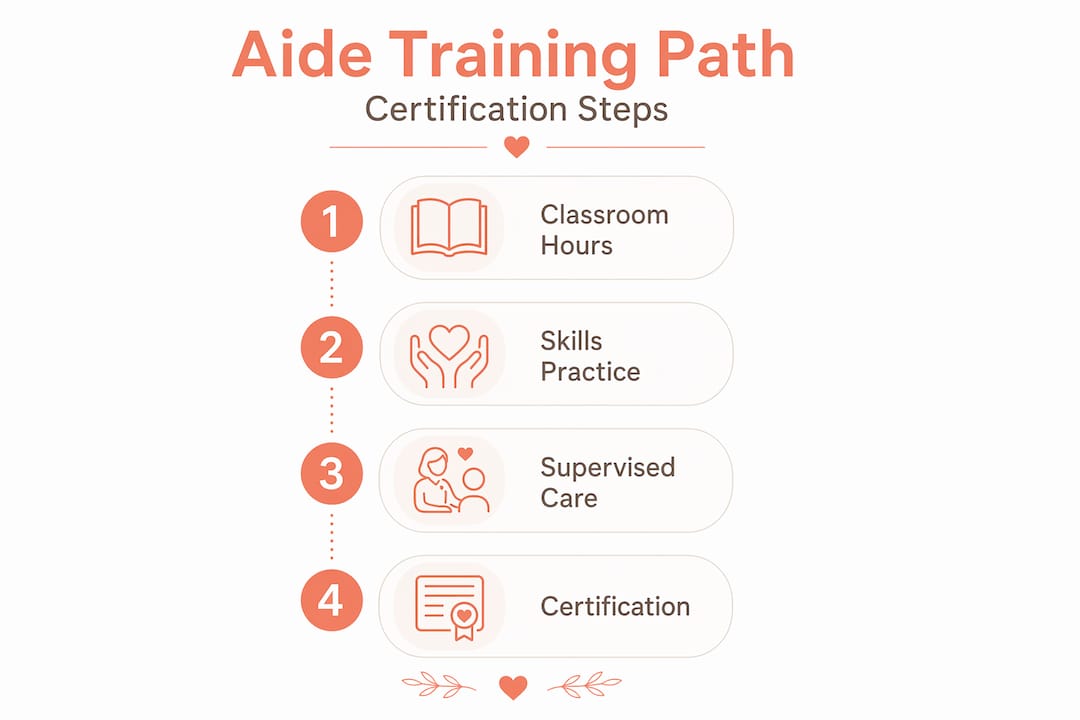
Federal Medicare certification requires a minimum of 75 training hours, including supervised hands-on experience. Some states go further. California, for example, mandates up to 120 hours. This training covers caregiving fundamentals and vital sign monitoring but does not confer nursing licensure.
When you hire through a Medicare-certified agency, you can verify that aides meet these federal standards. Independent hires require you to check credentials yourself, which adds risk.
Pro Tip: Ask any agency you consider whether their aides are trained beyond the federal 75-hour minimum. Agencies that invest in additional training tend to provide more consistent, higher-quality care.
A common misconception worth addressing directly: many families believe a home aide can handle all medical needs at home. In practice, skilled care tasks like wound management or IV therapy require a licensed nurse or therapist. An HHA supports and reports; they do not treat.
Navigating payment options for home aide services
Payment is where most families hit a wall. Here is a clear breakdown of the main funding sources and what each actually covers.
| Funding Source | What It Covers | Key Limitation |
|---|---|---|
| Medicare | Intermittent aide care tied to skilled services | Up to 28 hours per week; no custodial-only care |
| Medicaid State Plan | Personal care services as an entitlement | Narrower scope; no waiting list |
| Medicaid HCBS Waivers | Broader home-based services | Over 800,000 on waiting lists nationally |
| VA Aid and Attendance | In-home aide costs for qualifying veterans | Must meet pension and care criteria |
Medicare: what it covers and what it does not
Medicare covers home health aide services only when a skilled care trigger is present and the patient meets the legal definition of "homebound." Homebound means leaving home requires considerable effort. Personal care alone does not qualify. Once skilled services like physical therapy or nursing end, Medicare aide coverage stops too.
One important protection many families do not know about: the Jimmo settlement requires Medicare to cover care that maintains current function or slows decline, not only care that leads to improvement. This matters for chronic conditions where the goal is stability, not recovery.
Medicaid and VA options
Medicaid's Home and Community-Based Services waivers offer broader coverage but come with a serious catch. HCBS waiver waiting lists often extend beyond five years in many states. Medicaid state plan services are an entitlement with no waiting list, but they cover a narrower range of services. Apply for both at the same time.
For veterans, the VA Aid and Attendance pension benefit can be significant. The 2025 Elizabeth Dole Act increased reimbursement caps, and in some cases the benefit can cover in-home care costs at rates comparable to nursing facility care. If your loved one is a veteran, explore this option before assuming Medicare is the only path.
You can review payment and coverage options specific to Pennsylvania families to understand which programs apply in Lancaster, York, Bucks, and Chester Counties.
Pro Tip: Get your loved one's physician to document homebound status and skilled care needs in writing before you apply for Medicare home health benefits. Missing or vague physician documentation is the most common reason claims get denied.
How to engage and work with home aides effectively
Finding a qualified aide is step one. Getting the most out of that relationship takes deliberate effort from your side too.
- Assess care needs with professional input. A geriatric care manager or your loved one's physician can help you identify the right level of care. Be specific about physical limitations, cognitive status, medication schedules, and daily routines.
- Verify provider credentials. Check that the agency is Medicare-certified or state-licensed. Ask about background check policies, aide supervision practices, and how they handle aide absences.
- Participate in the Plan of Care. A written Plan of Care outlines every task the aide will perform, how often, and under what conditions. Review it carefully. Request updates whenever your loved one's needs change.
- Communicate directly and regularly. Set a weekly check-in with the agency supervisor. Keep a simple communication log at home where aides can note observations, and where you can leave instructions.
- Support the aide's work environment. Aides who feel respected and have clear expectations provide better care. Make sure the home has the supplies they need, and address concerns promptly rather than letting frustrations build.
Beyond logistics, think about what enhancing life with home support actually looks like day to day. Does your loved one have social interaction built into their schedule? Are meals something they enjoy, or just a task? Small details like these shape quality of life more than families often realize.
- Keep the home environment safe and organized to reduce aide workload and prevent falls.
- Involve your loved one in decisions about their care routine whenever possible.
- Rotate tasks that require physical effort to reduce aide fatigue and prevent injury.
- Share your loved one's personal history, preferences, and communication style with new aides to speed up relationship building.
Common challenges and how to handle them
Even well-planned home care runs into problems. Knowing what to expect helps you respond without panic.
Aide turnover is one of the most disruptive issues families face. High turnover in home care is an industry-wide reality. Reduce its impact by keeping thorough care notes that any new aide can review quickly. Ask agencies about their average aide retention rates before you hire.
Coverage gaps happen when an aide calls out sick and no backup is available. Agencies with larger staff pools handle this better than small operations. Always ask how an agency handles last-minute absences before you sign a contract.
Family caregiver burnout is real and underreported. Many family members take on coordination tasks, emotional support, and physical care on top of their own jobs and responsibilities. Respite care gives you scheduled time away without guilt. It is not a luxury; it is a care management tool.
Signs that you need respite support: you feel resentful of caregiving duties, you have stopped doing things you used to enjoy, or you are making more mistakes in your daily life. These are signals to act, not push through.
If you notice your loved one seems withdrawn, is losing weight, or expresses fear or discomfort around an aide, take it seriously. These can be signs of unmet needs or, in rare cases, inadequate care. Document what you observe and raise it with the agency supervisor immediately. You have both the right and the responsibility to advocate for your loved one.
Measuring quality of life improvements
Knowing whether home aide support is actually working requires more than a general sense that things are "going okay." You need specific indicators.
| Quality of Life Area | Positive Indicators | Warning Signs |
|---|---|---|
| Physical | Stable weight, fewer falls, medication adherence | Unexplained weight loss, new injuries |
| Emotional | Positive mood, engagement with activities | Withdrawal, increased anxiety or agitation |
| Social | Regular interaction, participation in preferences | Isolation, loss of interest in relationships |
Review these indicators every 30 to 60 days. A simple monthly check-in conversation with your loved one, the aide, and the agency supervisor covers most of what you need to know.
Pro Tip: Keep a brief written log of your observations after each visit. Over time, this record becomes invaluable for care plan adjustments, insurance documentation, and identifying patterns that a single conversation might miss.
When you notice a decline in any area, request a formal reassessment from the agency or your loved one's physician. Care needs change, and a Plan of Care that worked six months ago may no longer fit. Staying proactive about reassessment is one of the clearest ways to protect quality of life over the long term.
Our perspective on realistic expectations in home care
I've worked alongside families navigating home care for years, and the single biggest source of frustration I see is the gap between what families expect and what home aide support is actually designed to do. Many families come in expecting an aide to function like a nurse, a therapist, and a companion all at once. When that does not happen, they feel let down.
What I've found is that home care works best when families treat it as a partnership, not a handoff. The aide handles the daily tasks. The family stays engaged with the emotional and relational side of care. The agency manages oversight and compliance. When each party understands their role, the care experience improves for everyone, including the person receiving care.
I've also seen families delay applying for Medicaid waivers because they assume they won't qualify, or because the paperwork feels overwhelming. That delay costs them years on a waiting list. My honest advice: apply now, even if you are not sure you qualify. The worst outcome is a denial you can appeal.
The families I've seen get the most out of home aide support share one trait. They stay curious and communicative. They ask questions, read care notes, and speak up when something feels off. That level of involvement does not require medical knowledge. It just requires showing up consistently.
— Olivia Home Care Services, LLC
How Oliviahomecare supports your family's care goals
At Oliviahomecare, we provide personalized, non-medical home care designed to help seniors and individuals with disabilities live independently at home. Our trained aides support personal care services including bathing, grooming, and dressing, as well as companionship services that keep your loved one socially engaged and emotionally supported.

We also offer respite care for family caregivers who need scheduled relief, and our team can walk you through Medicaid approval, insurance options, and payment coverage. We serve families across Lancaster, York, Bucks, and Chester Counties in Pennsylvania. Call us today or schedule a free assessment to build a care plan tailored to your loved one's specific needs.
FAQ
What does a home health aide actually do?
A home health aide provides hands-on personal care such as bathing, dressing, and mobility assistance, plus basic health monitoring like vital sign observation. They cannot administer medication or perform skilled clinical tasks, which require a licensed nurse.
Does Medicare pay for full-time home aide care?
No. Medicare covers home aide services only when skilled care like nursing or therapy is also present, and only up to 28 hours per week in most cases. It does not cover full-time custodial care.
How long is the wait for Medicaid HCBS waiver services?
Waiting lists for HCBS waivers often extend beyond five years in many states, with over 800,000 individuals currently waiting nationally. Applying early and simultaneously for state plan services is strongly recommended.
Can veterans get help paying for home aides?
Yes. The VA Aid and Attendance pension benefit can cover in-home aide costs for qualifying veterans, and recent legislative changes have increased reimbursement caps to make this benefit more accessible.
How do I know if home aide care is improving my loved one's quality of life?
Track physical indicators like weight and fall frequency, emotional indicators like mood and engagement, and social indicators like participation and interaction. Review these every 30 to 60 days and adjust the care plan based on what you observe.