

Understanding how temporary home care is arranged can feel like a puzzle when you are facing a sudden need. A parent just had surgery. A family caregiver needs a break. A loved one with a disability needs short-term help at home. These situations come fast, and most families have no plan in place. This guide breaks down the full process, from identifying what type of care you need to finding the right provider, understanding costs, and making sure the care actually works. You will leave with a clear picture of your options and the steps to take.
Table of Contents
- Key takeaways
- What temporary home care services actually cover
- How temporary home care is arranged: step-by-step
- Cost of temporary home care and how to fund it
- Evaluating and choosing the right caregiver
- Managing hospital discharge to home care transitions
- Our perspective on what families get wrong
- How Oliviahomecare supports families with temporary care
- FAQ
Key takeaways
| Point | Details |
|---|---|
| Start with a needs assessment | Identify the type, frequency, and duration of care before contacting any provider. |
| Agencies offer faster vetting | Using a licensed agency speeds up background checks and care plan development. |
| Costs vary by arrangement type | Direct hires cost less per hour but carry more coordination responsibility for families. |
| Funding options exist beyond self-pay | Medicaid waivers, VA programs, and some insurance plans can offset temporary care costs. |
| Build a caregiver roster early | Pre-vetting two or three caregivers before a crisis dramatically improves outcomes. |
What temporary home care services actually cover
Temporary home care services are short-term, in-home support arrangements designed to help individuals who need assistance for a defined period. That period might be two weeks after a knee replacement, a month while a primary caregiver recovers from illness, or a few hours each week to give a family member a break.
The types of care available fall into several categories:
- In-home respite care: A trained caregiver steps in so the regular family caregiver can rest, work, or handle personal matters.
- Companion care: Non-medical support that includes conversation, light housekeeping, meal preparation, and transportation to appointments.
- Skilled nursing visits: Temporary nursing care options for wound care, medication management, or post-surgical monitoring provided by a licensed nurse.
- Adult day programs: Structured daytime care outside the home that functions as short-term home assistance when combined with morning and evening in-home support.
Who benefits most from these arrangements? Elderly adults recovering from surgery or illness are the most common recipients. Individuals with disabilities who need short-term help during a caregiver's absence are another major group. Family caregivers themselves benefit when respite care gives them time to recharge without guilt.
One thing families often get wrong: they assume temporary care is only for people already in long-term care programs. In reality, anyone can arrange short-term home assistance independently, often within days.
Temporary care is also not a lesser version of permanent care. It carries the same quality standards and, when arranged properly, delivers real results for both the recipient and the family.
How temporary home care is arranged: step-by-step
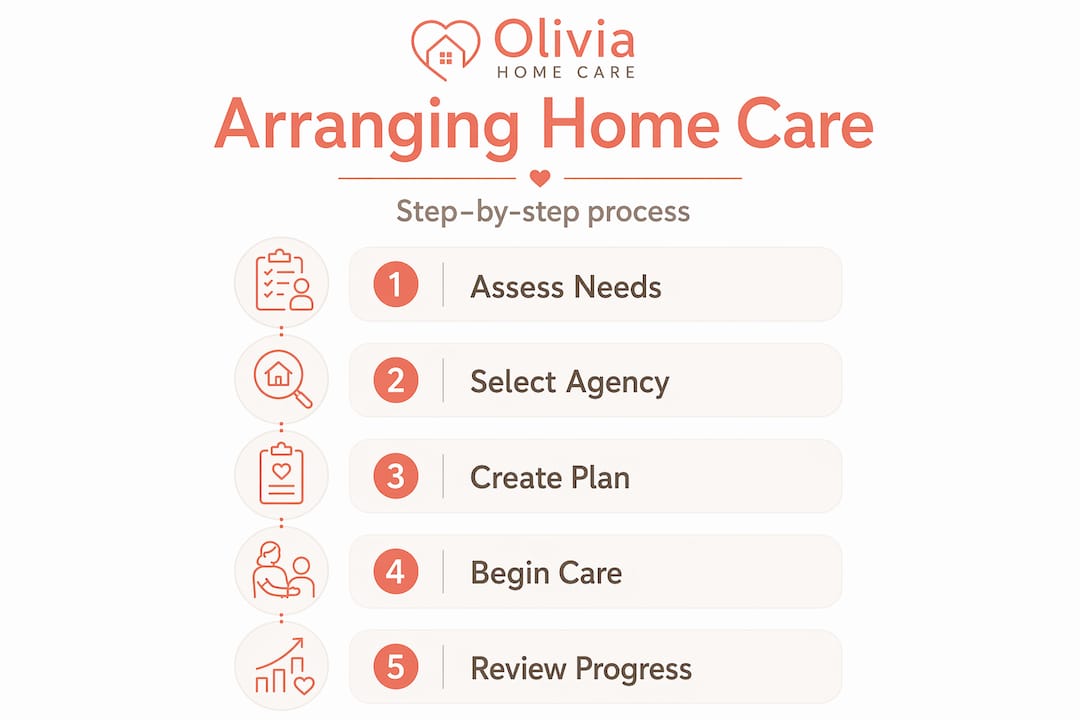
Arranging temporary caregivers does not require a social worker or a hospital referral, though both can help. Here is how the process works when you start on your own.
- Assess the care need. Write down what tasks the person needs help with, how many hours per day, and for how long. Be specific. "Help with bathing, dressing, and meal prep for three weeks" is far more useful than "general help."
- Decide between an agency and an independent caregiver. Agencies handle background checks, scheduling, and replacement coverage if a caregiver calls out sick. Independent caregivers cost less but require you to manage vetting and logistics yourself.
- Research your options. Search for licensed home care agencies in your area, ask your doctor's office for referrals, or contact your local Area Agency on Aging. For veterans, the VA Caregiver Support Program offers formal respite benefits worth exploring before you pay out of pocket.
- Complete an intake assessment. Once you contact an agency, they will conduct a care plan assessment to match the recipient's needs with the right caregiver. This step is faster than most families expect. Many agencies can begin services within 48 to 72 hours.
- Match qualifications to needs. A companion care aide is appropriate for someone who needs help around the house and social interaction. A certified nursing assistant or licensed nurse is necessary for medical tasks. Make sure the caregiver's credentials match what is actually required.
- Set the schedule and communication expectations. Confirm hours, tasks, emergency contacts, and how updates will be shared with the family. A written care plan prevents misunderstandings and keeps everyone on the same page.
Pro Tip: Ask the agency specifically about their backup caregiver policy. If your assigned caregiver is unavailable, you need to know how quickly a replacement arrives and whether that replacement has read the care plan.
Effective temporary care relies on documented care plans and routine communication to prevent gaps. This is not optional. It is the single biggest factor separating arrangements that work from ones that fall apart.

Cost of temporary home care and how to fund it
Understanding the cost of temporary home care upfront helps you plan without surprises. Rates depend on the type of care, the provider arrangement, and your location.
| Care Type | Direct Hire (per hour) | Agency Rate (per hour) | Minimum Visit |
|---|---|---|---|
| Companion / personal care | $20 to $25 | $25 to $35 | 2 hours |
| Certified nursing assistant | $22 to $30 | $28 to $40 | 2 hours |
| Skilled nursing visit | $40 to $60 | $50 to $80 | Per visit |
Agency rates run higher because they cover vetting, administration, and backup staffing. Most agencies also require a minimum of two hours per visit due to coordination costs. That matters when you are budgeting for short daily visits.
How do you reduce the out-of-pocket burden? Several funding paths are worth pursuing:
- Medicaid waivers: Medicaid waivers and state grants often fund in-home respite and adult day services for eligible individuals. Eligibility and covered services vary by state.
- VA programs: Eligible veterans can access up to 30 days of respite care per calendar year through VA programs. The VA's caregiver support stipend is calculated based on local home health aide rates.
- Long-term care insurance: Policies vary widely, but many cover community-based services including in-home respite. Review your policy's definitions carefully.
- Medicare Advantage: Original Medicare covers respite care only for patients enrolled in hospice. However, some Medicare Advantage plans extend benefits to respite services. Check your specific plan.
Pro Tip: Call your state's Area Agency on Aging before assuming you will pay entirely out of pocket. Many states have grant-funded programs that cover temporary home care for caregivers at no cost, and most families never find out about them.
Evaluating and choosing the right caregiver
Knowing how to find home care is one thing. Knowing how to evaluate what you find is another. These two factors determine whether the arrangement actually works.
When vetting any caregiver or agency, check for the following:
- Background checks: Agencies should conduct criminal history and abuse registry checks on all caregivers. If hiring independently, you are responsible for running these checks yourself.
- References: Ask for two or three references from families in similar care situations. A caregiver who works well with active seniors may not be the right fit for someone with dementia.
- Certifications: Confirm that the caregiver holds the credentials required for the tasks involved. Personal care and companion care do not require a nursing license. Wound care and medication management do.
- Emergency protocols: Ask how the caregiver handles a fall, a sudden change in condition, or a missed shift. You want a clear answer, not a vague one.
Once you select a caregiver, trial visits are important to reduce anxiety and build comfort, especially for individuals with dementia or significant cognitive changes. Introduce the caregiver while a family member is present. Stay for the first visit if possible. This simple step improves acceptance and reduces the chance of the arrangement breaking down early.
Here is a quick comparison of your two main provider options:
| Factor | Licensed Agency | Independent Caregiver |
|---|---|---|
| Vetting responsibility | Agency handles it | Family handles it |
| Backup coverage | Agency provides it | Family must find it |
| Cost | Higher per hour | Lower per hour |
| Flexibility | Structured scheduling | More flexible |
| Accountability | Agency oversight | Direct family oversight |
For most families arranging temporary care for the first time, a licensed agency offers less risk even at a higher hourly rate.
Managing hospital discharge to home care transitions
One of the most time-sensitive situations in temporary care is a hospital discharge. The discharge to assess model moves patients to temporary care settings within 24 to 72 hours after discharge. That is a short window, and families who have not prepared often scramble.
Hospital social workers and discharge planners are your best allies here. Contact them as early as possible during the hospital stay, not on the day of discharge. They can connect you with home care agencies, coordinate equipment delivery, and help set realistic expectations for recovery timelines.
Temporary care after a hospital stay is often the starting point for a longer conversation about ongoing needs. What begins as two weeks of post-surgical support sometimes reveals that a loved one needs more regular assistance. That is not a failure of the temporary arrangement. It is useful information that helps families make better long-term decisions.
Pro Tip: Ask the hospital discharge planner for a written list of tasks the patient will need help with at home. This document becomes the foundation of your care plan and saves significant time when contacting agencies.
Our perspective on what families get wrong
From our experience working with families across Lancaster, York, Bucks, and Chester Counties, I have seen one pattern repeat itself more than any other. Families wait until they are in crisis to start looking for temporary care. A parent falls on a Thursday. By Friday, they are searching for a caregiver to start Monday. That timeline rarely works well.
What I have learned is that the families who get the best outcomes are the ones who do the research before they need it. They identify one or two agencies they trust, ask about intake processes, and keep contact information on hand. When the need arises, they make one phone call instead of spending a weekend in a panic.
I have also seen families focus almost entirely on cost and miss the compatibility piece. A caregiver who is $5 per hour cheaper but a poor match for your loved one's personality will not last two weeks. The roster of backup caregivers concept matters here too. Having two or three pre-vetted options means you are never stuck.
The other mistake I see regularly is treating respite care as a permanent solution. It is not designed to be one. It works best when it is part of a broader support plan that includes family involvement, community resources, and a clear picture of what comes next.
Temporary care, done right, is genuinely effective. It keeps people at home longer, reduces caregiver burnout, and gives families the breathing room to make good decisions rather than reactive ones.
— Olivia Home Care Services, LLC
How Oliviahomecare supports families with temporary care
At Oliviahomecare, we specialize in short-term home assistance that is built around your loved one's specific needs, not a generic care package. Whether you need respite care for a weekend, post-surgical support for a few weeks, or companion care during a caregiver's recovery, our team is ready to help.

Our respite care services in Lancaster, York, Bucks, and Chester Counties are Medicaid-approved and designed for fast setup. We conduct a thorough intake assessment, match your loved one with a qualified caregiver, and provide a written care plan before services begin. We also accept various insurance plans to make care as accessible as possible. Explore our full range of home care services or contact us today to schedule a free assessment. Our team is ready to answer your questions and get care in place quickly.
FAQ
What does temporary home care typically include?
Temporary home care services include personal care, companion care, light housekeeping, meal preparation, and skilled nursing visits depending on the recipient's needs. The scope of care is defined in a written care plan developed during the intake assessment.
How quickly can temporary home care be arranged?
Most licensed agencies can begin temporary home care services within 48 to 72 hours after an intake assessment is completed. Hospital discharge situations may be coordinated even faster with the help of a social worker.
Is temporary home care covered by insurance?
Medicaid waivers and VA programs cover temporary and respite care for eligible individuals. Some Medicare Advantage plans also include respite benefits, though original Medicare covers respite only for hospice patients. Long-term care insurance policies may also apply.
How do I know if a temporary caregiver is qualified?
Ask the agency for proof of background checks, certifications, and references. For independent hires, you are responsible for running these checks. Match the caregiver's credentials to the specific tasks required, especially for any medical care needs.
When does temporary care become long-term care?
Temporary care transitions to long-term care when ongoing needs are identified during the short-term arrangement. The discharge to assess model specifically uses temporary placements to evaluate whether long-term support is needed before making permanent decisions.